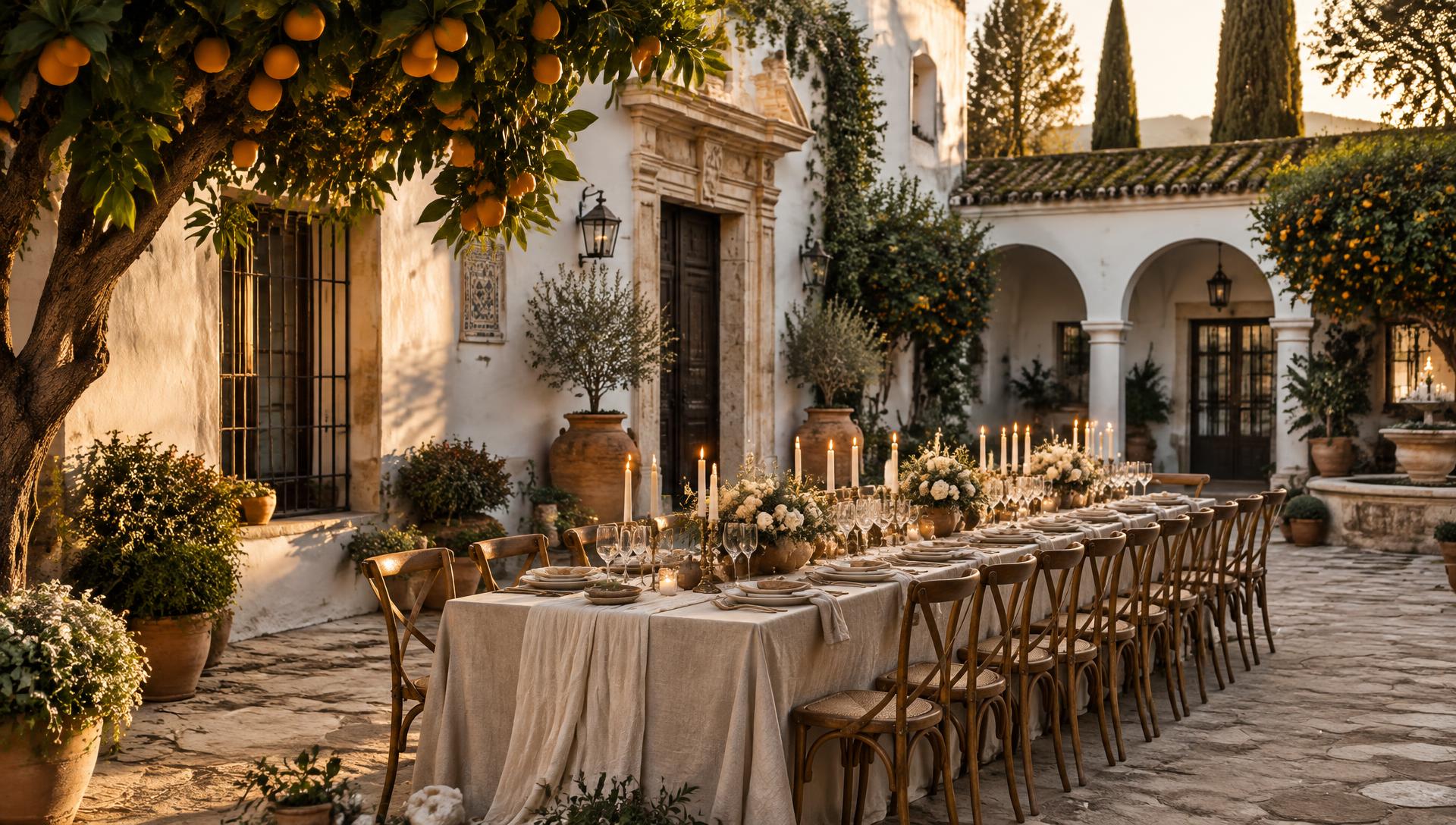
Most couples who dream of Spain picture the same thing: a long June evening, the heat lifting, dinner beginning as the sky turns pink. It is a beautiful picture, and it is also the one everyone else is planning. A winter wedding in Spain asks for a little more imagination, and gives a great deal back: mild, bright days, an unhurried region, the orange trees of Seville heavy with fruit, and an intimacy that a summer weekend rarely has.
Andalusia is the part of Spain where this works best. The south is among the mildest parts of mainland Spain in winter, and a December afternoon in Seville or on the Málaga coast can feel more like a pleasant October day in much of the United States. This guide explains what to expect from December to February, where a winter wedding feels most natural, and how to shape the day around the season rather than against it.
What the weather is really like
The figures below are the official long-term averages published by AEMET, Spain's state meteorological agency, for the airport stations of Seville, Málaga and Granada (climate normals 1981–2010), converted to Fahrenheit. They are averages, not forecasts, and any given week can be warmer, cooler or wetter.
| Month | Seville high / low | Málaga coast high / low | Granada high / low | Rainy days, Seville | Hours of sun, Seville |
|---|---|---|---|---|---|
| December | 62°F / 45°F | 64°F / 48°F | 56°F / 35°F | 7–8 | 154 |
| January | 61°F / 42°F | 62°F / 45°F | 55°F / 32°F | 6 | 183 |
| February | 65°F / 45°F | 64°F / 47°F | 60°F / 35°F | 6 | 189 |
Rainy days are days with at least 1 mm of rain. Source: AEMET, climate normals 1981–2010.
Three things are worth noticing. Days are mild and, more often than not, sunny. Nights are cool everywhere and properly cold in Granada, where January lows sit around freezing. And rain arrives on roughly a quarter of winter days in Seville, usually in passing spells rather than long grey weeks. In practice, this means a winter wedding is planned for warm afternoons, candlelit evenings indoors or under cover, and a reliable plan for a wet day.
Short days, beautiful light
The other defining feature of winter is the light. In December the sun sets in Seville at around 6 pm, and by mid-February closer to 7 pm. Compared with a June wedding, when the sky stays bright until almost ten, the whole day moves earlier.
That is not a drawback. The winter sun sits low all day, and the late afternoon in Andalusia is soft and golden on whitewashed walls and old stone. A winter timeline might look like this:
- Late morning or early afternoon: getting ready, with time for a slow lunch for guests.
- Around 3:30 to 4 pm: the ceremony, in full daylight and at the warmest part of the day.
- The last hour before sunset: portraits, while guests gather for drinks outdoors with heaters or in a sunny courtyard.
- After dark: dinner indoors or in a covered patio, lit by candles and, where the venue allows, an open fire.
- Late evening: dancing. The Spanish rhythm of a long night is the same in every season.
If you would like a sense of how this compares with the rest of the year, our guide to the best time to get married in Andalusia covers the climate month by month.
Where a winter wedding feels most natural
Not every Andalusian setting suits the cold months equally. The places that shine in winter are the ones with beautiful interiors and a sense of shelter.
Seville and its palaces
Seville is a winter city at heart. Its palaces and townhouses are built around patios, galleries and salons designed for every season, and the old town is calm and walkable after the summer crowds. A ceremony in a courtyard with the afternoon sun on the tiles, then dinner in a candlelit salon, is perhaps the most classic winter wedding in Spain. For the countryside version, our guide to hacienda weddings near Seville explains how estates use their interiors and covered spaces.
The coast around Málaga and Marbella
The Costa del Sol is the mildest part of the region, with slightly warmer nights than inland. It suits couples who want sea views and a sunny ceremony, with the reception moving inside once the sun goes down. Our Marbella wedding guide covers the area and its access from Málaga airport.
Granada and the mountains
Granada in winter is the most dramatic choice: the Alhambra against the snow-capped Sierra Nevada, crisp clear air and nights for wool coats. The Sierra Nevada ski resort usually opens around late November or early December, snow permitting, so some guests may want to combine the trip with a day on the slopes. It is best suited to smaller groups who love that atmosphere, since evenings are genuinely cold. Our Granada wedding guide has more on the city.
The quiet advantages of winter
- Calm. The region is unhurried, with fewer visitors in the old towns and around the monuments.
- Availability. Winter is outside the main wedding season, so venues and suppliers are generally less booked than in May, June or September. This is a general pattern, not a guarantee; some venues close for part of the winter, and the festive weeks fill quickly.
- Atmosphere. From early December, Spanish towns dress up for Christmas, with lights in the streets and nativity scenes in churches and squares. A welcome evening in that setting needs very little decoration.
- A slower weekend. With dark evenings and long lunches, winter weddings naturally lean towards intimate gatherings, long tables and conversation.
What to plan around
The holidays
Spain's festive season has its own calendar. Early December brings two national holidays, 6 and 8 December, which often create a long weekend that Spanish families use to travel. Christmas Eve is the big family night in Spain, and the season continues to 6 January, Epiphany, with the Three Kings parades the evening before. These dates can mean busier travel and some suppliers taking time off, so it is worth checking them early, alongside your guests' own holiday plans at home.
Flights and travel for guests
Winter flights to Spain are often easier to find outside the Christmas and New Year peak, but schedules can be thinner and some seasonal routes do not operate. Most US guests will connect through Madrid or another European hub. Our guide for guests, attending a wedding in Spain, covers travel documents, dress and the rhythm of the day.
Comfort for everyone
- A covered plan from the start. Treat the indoor or covered option as the main plan, with the outdoor moments as a bonus.
- Warmth outdoors. Heaters, blankets and wraps for any time spent outside after sunset.
- Guest notes. Let guests know to pack a proper coat for the evening, especially in Granada, and comfortable shoes for damp cobblestones.
- Seasonal menus. Winter in Andalusia is the season of slow-cooked dishes, citrus and good red wine, and a menu built around it feels natural.
If you are also thinking about the legal side of marrying in Spain, our guide to getting legally married in Spain as an American couple explains the options, which are the same whatever the season.
How we help
A winter wedding depends on choosing the right place and writing the day around the light. We help couples find venues with beautiful interiors and covered spaces, set a ceremony time that suits the season, and plan the weekend around their guests, from transport to a welcome evening. Explore the venues we work with, see the scope of our planning services, or read why couples choose Andalusia.
Not sure yet whether winter is your season? Our short wedding quiz gives you a first sense of setting, style and guest count. And when you have a date in mind, begin your enquiry; we reply personally.
Frequently asked questions
Is Spain good for a winter wedding?
Southern Spain is one of the mildest places in Europe for a winter wedding. In Seville and on the Málaga coast, average December to February highs are in the low to mid 60s°F, with plenty of sunshine. Evenings are cool, so receptions are usually held indoors or under cover.
How cold is Andalusia in December?
According to AEMET's long-term averages, December highs are around 62°F in Seville and 64°F on the Málaga coast, with lows in the mid to upper 40s°F. Granada is colder, with highs around 56°F and nights close to freezing.
What time is sunset in Seville in winter?
In December the sun sets at around 6 pm in Seville, moving later through January to around 7 pm by mid-February. Winter ceremonies are usually held in the mid-afternoon, with portraits in the hour before sunset.
Does it rain a lot in Andalusia in winter?
Winter is the wetter season, but rain is not constant. Seville averages around six to eight days a month with meaningful rain between December and February, usually in short spells. Every winter wedding should still have a covered plan.
Are winter weddings in Spain less expensive?
Some venues and suppliers offer different rates outside the main season, but this varies widely and is not guaranteed. The clearer advantage of winter is usually wider availability and a calmer region rather than a fixed saving.